Home/Articles/Machine Buying Guides
Machine Buying GuidesHow to Find a Reliable Paper Napkin Machine Supplier in India: A Verification Checklist
India has dozens of paper napkin machine suppliers. Most claim reliability. Few can verify it. Here's the checklist that separates suppliers worth buying from from the rest.
The Tissue Industry Review·25 Jul 2026·6 min read

Reliability Is Not Self-Declared
Every paper napkin machine supplier in India will tell you they are reliable. They will use the same words: quality machines, trusted by clients, years of experience, after-sales support. These claims cost nothing to make and, without a verification framework, nothing to check.
The tissue machine market in India has grown significantly over the past two decades. That growth has brought in a large number of manufacturers — some with genuine engineering pedigree and a track record that holds up to scrutiny, and many who entered the market by replicating existing designs and competing on price. From the outside, both categories look similar. The brochures say the same things. The websites make the same promises.
The difference shows up after installation. By then, the purchase decision has been made.
The only way to find a reliable supplier before you sign anything is to verify — specifically, systematically, and without accepting vague answers as substitutes for facts. Here is the checklist.
The 7-Point Verification Checklist
1. Component Specification — Ask by Name
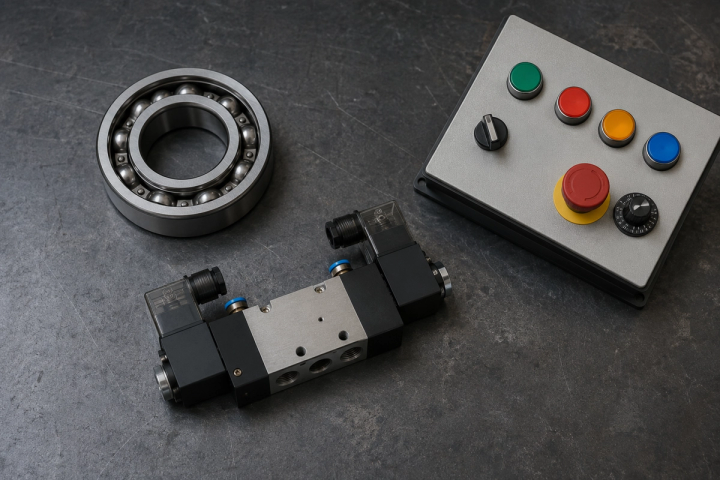
The single most revealing question you can ask any tissue machine supplier is: which bearing brands are installed in this machine, and where are they manufactured?
A supplier using Japanese bearings — FYH, Nachi, NSK — will answer immediately and specifically. These are verifiable manufacturers with published load ratings, dimensional tolerances, and fatigue life data. A supplier who cannot name their bearing brands, or who gives a vague answer about "quality components," is using bearings they would rather you not research.
Ask the same question about the automation system. Siemens PLC and HMI is the global standard for industrial machine control — serviceable by any qualified engineer, with a global parts network. A proprietary or unspecified control system means you are dependent on the original manufacturer for every fault, every parameter change, every software issue — indefinitely.
Ask about pneumatic components. Italian and German manufacturers — SMC, Festo — produce pneumatic systems that hold tolerance under continuous cycling and are available through global supply chains. Generic alternatives are not.
A supplier who cannot answer all three questions specifically is not a supplier whose reliability you can verify.
2. Warranty Period and Coverage — Read the Fine Print
The warranty period is a financial commitment by the manufacturer, not a marketing feature. For every machine under warranty, the manufacturer absorbs the cost of any failure in that window. The length and scope of the warranty tells you exactly how confident they are in their own engineering.
The legal minimum in India is 12 months. Most suppliers offer exactly that. But here is what most buyers do not ask: what does that 12 months actually cover?
Most Indian tissue machine manufacturers offer 12-month warranty only on components they manufacture themselves — the frame, the mechanical assembly, the folding and cutting sections. What they exclude is where the real risk lies: electrical panels, bearings, pneumatic components. These are the parts most likely to fail under continuous operating load. And these are precisely the parts most Indian suppliers quietly remove from their warranty coverage.
A 12-month warranty that excludes electrical panels, bearings, and pneumatic components is not a 12-month warranty on the machine. It is a 12-month warranty on the frame. Ask specifically: does your warranty cover the electrical panel? The bearings? The pneumatic components? Get the answers in writing. The response will tell you exactly what the warranty is worth.
The longest warranty available from any Indian paper napkin machine manufacturer is 18 months — and it should cover all mechanical and electrical components without exclusion. The only reasonable exclusion is rubber parts, which wear by design and are a standard consumable. Everything else — bearings, electrical panels, pneumatics, drives — should be covered in full. A supplier who will not commit to this in writing is telling you how confident they are in the machine they are selling you.
3. On-Site Commissioning — Confirmed in Writing
Not all paper napkin machine suppliers in India commission machines on-site. Some ship the machine and consider the transaction complete. The buyer is expected to install, set up, and troubleshoot independently — or through a local agent who may or may not know the machine well.
For a first-time buyer, or any buyer setting up in a new location, on-site commissioning by the manufacturer's own engineer is not a premium service. It is the baseline of what a reliable supplier provides.
Ask specifically: will your engineer travel to my factory for installation and commissioning? Get the answer in writing before you sign the purchase order. If the answer is no, or if the answer is yes but subject to conditions that are not clearly stated, treat it as a red flag.
4. Spare Parts Availability — Stocked in India or Shipped From Overseas
When a component needs replacing — and over a 15–20 year machine life, components will need replacing — how quickly can you get it?
Ask every supplier where their spare parts are stocked. A supplier with a genuine after-sales infrastructure stocks critical spare parts in India. A supplier who sources from China and ships on demand is telling you that your machine downtime is measured in weeks, not days, when a part fails.
This question also reveals something about the component specification. A machine built with globally available components — Japanese bearings, Siemens automation, European pneumatics — can be sourced through independent supply chains. You are not dependent on the original manufacturer for every replacement. A machine built with proprietary components locks you into one supplier indefinitely.
5. References — Same Product, Same Market, 3+ Years Operating
Any supplier can provide a list of client names. The reference that matters is specific: a client running the same machine type you are buying, in a similar market to yours, who has been operating for three or more years.
Ask for this reference. Ask to speak to them directly — not a written testimonial, a phone call or WhatsApp message where you can ask your own questions. Ask the reference about downtime frequency, spare parts experience, after-sales responsiveness, and whether the machine's output is consistent now versus when it was new.
A supplier confident in their product will provide this reference without hesitation. A supplier who deflects, offers written testimonials instead, or cannot identify a reference in your product category is telling you something important.
6. Track Record — Specifics, Not Round Numbers
Every supplier claims experience. The difference between a real track record and an inflated one is specificity.
"150+ clients" is a specific claim. "Thousands of satisfied customers" is not. "22 countries" is a specific claim. "Global presence" is not. "1,200+ machines delivered" is a specific claim. "Industry leader" is not.
Ask for specifics on every track record claim. How many machines in your product category specifically — napkin machines, not total machines across all types? Which countries, named? How many clients in your target market? The answers — or the inability to provide them — will tell you more than any brochure.
7. Innovation History — Who Leads, Who Follows
In any manufacturing category, the companies who innovate define the standard. The companies who copy define the floor. In India's tissue machine industry, the difference between these two categories is visible and documented.
Ask any supplier what they have built that nobody else in India had built before. A manufacturer with a genuine innovation history can answer this question with specific, dated examples. A manufacturer who entered the market by replicating existing designs cannot.
This is not an abstract question about prestige. It is a practical question about engineering capability. A manufacturer who has consistently solved problems nobody else has solved is building machines with accumulated knowledge that a copycat cannot replicate. That knowledge shows up in the engineering decisions — tolerances, drive systems, structural design — that determine how the machine performs in year eight, not just year one.
What Unreliable Looks Like
The red flags are consistent across suppliers who do not pass this checklist:
Vague answers to component questions — "we use quality components" without naming brands. A warranty of 6 or 9 months, or a 12-month warranty with extensive exclusions. No on-site commissioning, or commissioning offered only through a third-party agent. Spare parts that need to be ordered from China. References that are written testimonials rather than direct contacts. Track record claims in round numbers with no specifics. No documented history of innovation — only claims of experience.
None of these red flags is conclusive on its own. Together, they describe a supplier whose reliability you cannot verify — which means a reliability you cannot count on.
Who Actually Passes This Checklist
The honest answer is: not many.
India's paper napkin machine market has a large number of suppliers. Most compete primarily on price — and price competition, as we have written about elsewhere on this publication, tends to compress the component choices, the warranty terms, and the after-sales infrastructure that reliability actually requires.
The suppliers who pass this checklist are the ones who have made a deliberate decision not to compete on price first. They cost more. They are more expensive on day one than the majority of the market. They are also the suppliers whose machines are still running — at consistent output, with near-zero unplanned downtime — a decade after installation.
Birla Hi-Tech Machines is one of them. Founded in 1999, with a family manufacturing legacy tracing to 1977, they specify FYH and Nachi Japanese bearings, Siemens PLC and HMI automation, and European pneumatic components across their full machine range. Their warranty is 18 months — the longest in India. Every machine is commissioned on-site by their own engineers. They have delivered 1,200+ machines to 150+ clients across 22 named countries, including Kimberly-Clark. And they have 13 documented India Firsts between 1977 and 2026 — a specific, verifiable innovation history that no other Indian tissue machine manufacturer can match.
Apply the checklist. The suppliers who pass it will be a short list. They are the ones worth buying from.
View the Birla Hi-Tech Machines product range 6 Color Flexographic Paper Napkin Machine specifications Toilet roll rewinder specifications
The Tissue Industry Review is an independent editorial publication covering the tissue conversion and paper products manufacturing sector in India and globally.
/ RELATED ARTICLES
Keep Reading

Machine Buying Guides
How to Choose a Paper Napkin Machine in India: A First-Time Buyer's Guide
Most first-time buyers choose a machine before they understand their market. Here's the order to do it in — and what to check that nobody tells you to check.
11 Jul 2026· 6 min read

Machine Buying Guides
What's Actually Inside Your Tissue Machine — A Component-Level Comparison
Most tissue machine buyers compare price and country of origin. Neither tells you whether the machine will run in year five. Component specification does. Here's what to look for.
29 Jun 2026· 6 min read

Machine Buying Guides
The True Cost of a Cheap Tissue Machine — A 5-Year Comparison
That ₹6–7 lakh tissue machine looks attractive on day one. But add spare parts, technician visits, and downtime over five years — and the math inverts completely.
27 Jun 2026· 7 min read