Home/Articles/Machine Buying Guides
Machine Buying GuidesHow to Choose a Paper Napkin Machine in India: A First-Time Buyer's Guide
Most first-time buyers choose a machine before they understand their market. Here's the order to do it in — and what to check that nobody tells you to check.
The Tissue Industry Review·11 Jul 2026·6 min read

The Market You're Entering Is Growing — But So Is the Competition
India's tissue paper market reached 160,000 tonnes in 2023, growing at a CAGR of 8.8% since 2018. By 2026, installed tissue conversion capacity is projected to hit 417,000 TPA — a 19% CAGR in two years. Post-COVID hygiene awareness permanently shifted consumer behaviour, and this year alone has seen a significant wave of new paper mills coming online across India.
The opportunity is real. So is the competition. A new entrant who sets up without understanding the market they're entering will find themselves competing on price from day one — which, as anyone who has tried it will tell you, is a race with no finish line.
The right starting point is not which machine to buy. It is which market to serve.
Research Your Market Before You Touch a Machine Catalogue
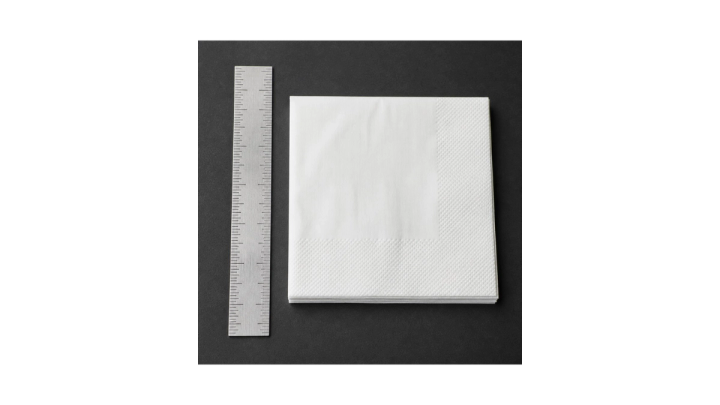
This is the step most new entrants skip — and it is the most expensive mistake in the category.
Before you speak to a single machine manufacturer, go into the market you plan to sell in. Visit the shops, the distributors, the hotels, the caterers. Look at what is already on the shelves or on the tables. Then do something most people don't: verify it yourself.
Check the sheet count manually. A packet that says 100 sheets does not always contain 100 sheets. Count them. Under-counting is common enough in this industry that assuming the packaging is accurate is a mistake you will only make once — especially if you plan to differentiate on honest count.
Measure the size yourself. The most common napkin size in India is 30×30cm — a 1/4 fold from a 30×30cm sheet. But markets where 30×30 is the standard often have competitors quietly selling 29×29 or 29×30, with 30×30 printed on the packet. The difference is a few millimetres per sheet, which compounds into significant material savings across thousands of packets. Measure the actual product, not what is written on it.
Check the paper quality. Feel the tissue. Weigh it if you can. GSM — grams per square metre — determines tissue quality and cost. Know what GSM your target market is buying before you decide what GSM you will produce. If you enter at a higher GSM than the market is used to, you are differentiating on quality. If you enter at lower, you are cutting corners your customer will eventually notice.
This research takes a few days. It saves years of operating in the wrong direction.
Which Machine to Start With
For most new entrants in India, the right starting machine is a single-size paper napkin machine producing 1/4 fold napkins at 30×30cm. If your market research points toward toilet rolls or kitchen towels instead, that is a different machine category entirely — toilet roll rewinders follow a different set of buying criteria.
This is the most widely consumed napkin format in the Indian market — used in homes, restaurants, dhabas, caterers, and institutions. It is the format with the broadest customer base and the most established distribution infrastructure. Starting here gives you the largest addressable market while you build your operation, your quality, and your client relationships.
A single-size machine does exactly what the name says: it produces one size. However, there is some flexibility within that. One dimension of the napkin is fixed by the machine itself and does not change. The other dimension is determined by the width of the paper reel you feed in. So a 30cm machine with a 30cm reel gives you a 30×30 napkin. The same machine with a 27cm reel gives you a 27×30. One side stays constant. The other adjusts with the reel. This gives you product variation without buying a new machine — but it is variation within a range, not unlimited flexibility. Understand what that range is before you buy.
The right machine for a new entrant runs at a production speed you can actually manage — not the maximum the manufacturer quotes, but a realistic operating speed your team can maintain consistently. Ask for the speed range, not just the peak figure.
Understanding Machine Configuration
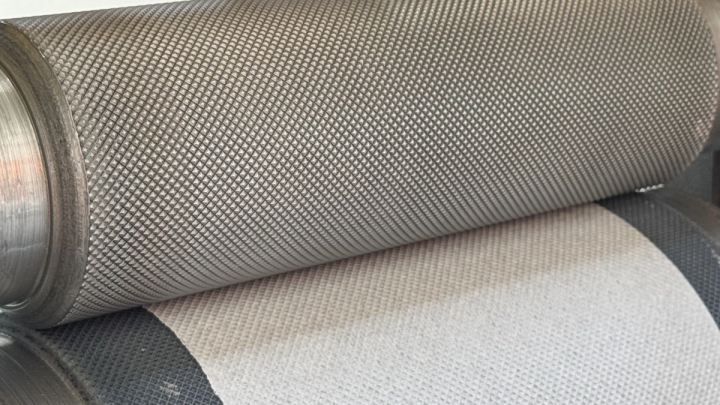
When you speak to manufacturers, you will be asked about configuration. Two questions come up repeatedly that most first-time buyers answer without fully understanding what they are agreeing to.
Embossing units: Embossing is the pattern pressed into the tissue — the small diamond or floral texture you see on most napkins. An embossing unit presses this pattern onto the sheet before folding. More embossing units allow easy changeover between embossing designs. At one given time only one embossing rollers works. For most Indian market entry points, one embossing unit is standard. Two gives you more flexibility on pattern quality.
Printing units: A printing unit applies colour and design to the napkin before folding. If your target market is plain white napkins — the majority of the Indian market — you do not need a printing unit at day one. If you plan to sell printed napkins to restaurants, hotels, or events, you will need at least one colour unit. Each additional colour unit adds cost and complexity. At the upper end, a 6-colour flexographic printing machine produces designer and patterned napkins for hospitality and premium markets — a different product category from standard white napkins. Decide based on what your market research showed your target customer is already buying — you can also go for higher number of printing units to differentiate yourself amongst the crowd.
A common mistake: buying more configuration than the market requires. A machine with six colour printing units sitting in a factory producing plain white napkins or two color designs is capital tied up in features you are not using.
What to Ask Before You Sign Anything
The machine is only part of the decision. Who builds it, stands behind it, and supports it after installation matters as much as the specification on paper.
Ask every manufacturer these four questions before you decide:
What is the warranty period, and what does it cover? The minimum in India is 12 months. Some manufacturers offer 18 months — the longest available. More importantly, ask what is excluded. Consumables like blades and rubber parts wear by design and are typically excluded. Everything else should be covered.
Who installs the machine, and do they come to your facility? Not all manufacturers send engineers for commissioning. Some ship the machine and leave installation to you. For a first-time buyer, on-site installation and training by the manufacturer's own team is not optional — it is the difference between a machine that runs correctly from day one and one that runs incorrectly for months while you figure out why.
Which bearings and automation systems are used? The components inside the machine determine how long it runs without intervention. Japanese bearing brands — FYH, Nachi — and globally serviceable automation systems like Siemens PLC indicate a machine built to hold tolerance over time. Generic or unspecified components indicate the opposite. If the manufacturer cannot answer this question specifically, that is your answer.
Can you speak to a customer who has run this machine for three or more years? A manufacturer confident in their product will have these references. Ask for one in a similar market to yours — same product type, similar production volume. Their experience is the most accurate forecast of yours.
Where to Start
India's tissue market is growing at nearly 9% annually and is projected to reach USD 10.5 billion by 2033. The window for new entrants who set up correctly — right product, right market, right machine — is genuinely open.
But the manufacturers who will be operating profitably in year five are the ones who did the market research first, chose their machine configuration deliberately, and bought from a manufacturer they could verify.
Birla Hi-Tech Machines has been building paper napkin machines in India since 1999, with a family manufacturing legacy tracing to 1977. With over 1,200 machines delivered across 22 countries and an 18-month warranty — the longest offered by any Indian manufacturer — their range is a useful reference point for what a correctly specified machine looks like.
View the full product range at birlahitechmachines.com
The Tissue Industry Review is an independent editorial publication covering the tissue conversion and paper products manufacturing sector in India and globally. Market figures sourced from IMARC Group and Paper Mart industry analysis.
/ FEATURED PRODUCT
Interested in the machines behind this industry?
Birla Hi-Tech Machines manufactures tissue converting equipment used by businesses across 22 countries.
View Product →/ RELATED ARTICLES
Keep Reading

Machine Buying Guides
How to Find a Reliable Paper Napkin Machine Supplier in India: A Verification Checklist
India has dozens of paper napkin machine suppliers. Most claim reliability. Few can verify it. Here's the checklist that separates suppliers worth buying from from the rest.
25 Jul 2026· 6 min read

Machine Buying Guides
What's Actually Inside Your Tissue Machine — A Component-Level Comparison
Most tissue machine buyers compare price and country of origin. Neither tells you whether the machine will run in year five. Component specification does. Here's what to look for.
29 Jun 2026· 6 min read

Machine Buying Guides
The True Cost of a Cheap Tissue Machine — A 5-Year Comparison
That ₹6–7 lakh tissue machine looks attractive on day one. But add spare parts, technician visits, and downtime over five years — and the math inverts completely.
27 Jun 2026· 7 min read