Home/Articles/Technical Knowledge
Technical KnowledgeWhy Birla Hi-Tech Machines Builds India's Highest-Quality Paper Napkin Machines
In a market where most manufacturers compete on price, Birla Hi-Tech Machines has spent 25 years competing on something harder to copy: engineering standard.
Birla Hi-Tech Machines·1 Jul 2026·6 min read

The Quality Problem in India's Paper Napkin Machine Market
India has no shortage of paper napkin machine manufacturers. Walk any trade exhibition and you will find dozens of options, most of them competing on the same axis: price.
When price is the primary differentiator, quality becomes a variable. Manufacturers find ways to deliver at the number the buyer wants — and the way they find is almost always components. A cheaper bearing here, a domestic control system there. The machine looks the same on the outside. The difference shows up in year three, when fold quality starts drifting, or year five, when the first major repair bill arrives.
Birla Hi-Tech Machines was founded on a different premise: that a paper napkin machine is a 20-year capital investment, and should be built like one. That decision shapes every engineering choice we make — from the bearings we specify to the tolerances we machine to, to the warranty we are willing to stand behind.
What Goes Inside a Birla Machine
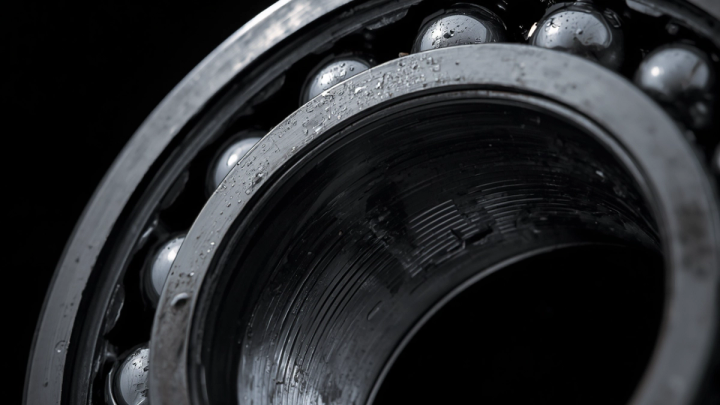
The quality of a paper napkin machine is determined before a single sheet of tissue runs through it. It is determined at the component selection stage.
Birla Hi-Tech Machines specifies FYH and Nachi bearings — Japanese-manufactured, to JIS and ISO tolerance grades — throughout our machines. These are not the bearings most Indian paper napkin machine manufacturers use. At the price points most competitors operate at, Japanese bearings are the first cost to cut. We have not cut it.
The reason matters: a tissue conversion machine runs continuously, under rotational load, for 10 to 16 hours a day. The bearing is what keeps every rotating element — shaft, roller, cam — running within tolerance. A bearing that degrades faster than it should causes vibration, which causes fold inconsistency, which causes product variation. By the time a buyer notices the output problem, the bearing problem has been compounding for months.
Our automation runs on Siemens PLC and HMI systems — the global standard for industrial machine control. This means any qualified automation engineer, anywhere in the world, can diagnose, service, and update the control system. It means spare parts and firmware support are available through Siemens' global network. It means you are not dependent on us for every software query after installation.
Pneumatic systems — which control the folding, cutting, and transfer functions that determine output consistency — are sourced from European manufacturers. These components are specified to tolerance levels that hold across temperature variation and continuous cycling, and are available through global supply chains. If a pneumatic valve needs replacing in Kenya or Colombia, it can be sourced regionally. It does not need to come from our factory.
No other Indian paper napkin machine manufacturer uses this component specification. This is not a marketing claim — it is a decision that is visible on the machine itself.
How a Birla Machine Is Engineered
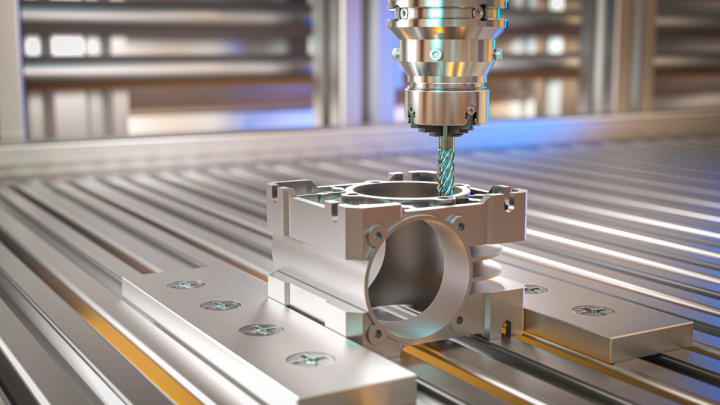
Components alone do not make a quality machine. How those components are brought together — the design philosophy, the machining standard, the structural decisions — determines whether the machine performs consistently across its operating life.
Birla Hi-Tech Machines engineers to European standards. This means precision-machined frames and structural components, machined on VMC and CNC equipment to tight dimensional tolerances. It means the geometry of the machine — the alignment of shafts, the registration of folding plates, the timing of cut cycles — is held to a specification that does not drift as the machine accumulates operating hours.
This matters for one practical reason: output consistency. A paper napkin machine that is correctly engineered produces the same fold quality in year eight as it did in year one. The sheet count is accurate. The fold is clean. The dimensions are within specification. A machine that is not correctly engineered begins to drift — slowly, then noticeably — as tolerances accumulate and components wear unevenly.
Machine design at Birla also reflects a deliberate approach to speed without compromise. Our napkin machines run at 180 to 250 metres per minute — the fastest throughput available from any Indian paper napkin machine manufacturer. Achieving that speed without sacrificing fold quality or mechanical reliability requires specific structural decisions: frame rigidity to absorb high-speed vibration, drive systems sized for continuous operation at peak load, and folding geometry designed to maintain registration at speed.
The frame itself is built to last. Not five years. Not ten. The machines we sold in the early years of this company are still running in client factories today. That is not an accident of maintenance — it is the outcome of building the structure to a 20-year standard from the start.
The Warranty as a Commitment, Not a Feature
Birla Hi-Tech Machines offers an 18-month warranty on all machines — the longest warranty period offered by any paper napkin machine manufacturer in India.
Most manufacturers in this market offer 12 months, the legal minimum. Some offer less. The warranty period is worth examining carefully, because it represents a financial commitment by the manufacturer. For every machine under warranty, the manufacturer absorbs the cost of any failure. A manufacturer who offers 18 months is stating, in contractual terms, that they are confident their machine will not fail in that window.
We offer 18 months because we are confident. The component specification and engineering standard that go into every Birla machine give us that confidence. If we were not confident, we would offer 12 months like everyone else.
The warranty covers parts and labour for manufacturing defects. It excludes consumables — blades, rubber parts — which wear by design and are straightforward to replace. Everything else is covered. No conditions, no exceptions.
The Evidence: 25 Years, 1,200+ Machines, 22 Countries
Quality claims are easy to make. The evidence that supports them is harder to accumulate — and harder to fake.
Birla Hi-Tech Machines has delivered over 1,200 machines to more than 150 clients across 22 countries. Those machines are running in tissue manufacturing facilities in Nigeria, Vietnam, Russia, Colombia, Romania, the UAE, and across India. They were not sold on price — our machines are priced at a premium to the Indian market, intentionally, because they are built to a different standard.
Our clients include Kimberly-Clark — the world's largest tissue manufacturer. Kimberly-Clark does not buy on price. They buy on specification, reliability, and after-sales support. Their choice to source from Birla Hi-Tech Machines is a quality endorsement that no marketing material can replicate.
The family behind Birla Hi-Tech Machines has been building tissue conversion machines since 1977 — three generations of manufacturing, across five decades. Our grandfather, Late Shri Pushkar Lal Birla, invented India's first automatic paper napkin folding machine and received the Bharat Ratna Vishvesvaraya Award from the President of India in 1986 for that contribution. The technical knowledge accumulated across those decades is embedded in every machine we build today.
A 94–95% repeat business rate — meaning almost every client who buys one Birla machine eventually buys another — is the most honest measure of quality we can offer. Clients do not come back for machines that disappoint them.
What This Means for Your Business
A Birla paper napkin machine runs. That is the simplest way to state what our engineering standard delivers.
It runs at consistent output — the same fold quality, the same sheet dimensions, the same throughput — in year one and in year ten. Your overheads will increase over that period. Your machine's performance will not decrease.
It runs with near-zero unplanned downtime. The components are specified to last. The engineering is designed to hold tolerance. The result is a machine that does not fail in the ways that cheaper machines fail — bearing seizure, electrical faults, fold drift — because the decisions that lead to those failures were not made when this machine was built.
It runs without a spare parts stockpile. Because the components are globally available — Japanese bearings, Siemens automation, European pneumatics — you do not need to pre-purchase a spare parts kit and store it in your factory. When something needs replacing, you source it. The global supply chain for the components in a Birla machine is the same supply chain that serves manufacturers worldwide.
And when something does go wrong — in the first 18 months, under warranty, or after — we send an engineer. We do not send a manual.
Before You Decide
If you are evaluating paper napkin machines in India, ask every manufacturer you speak to the same questions:
Which bearing brands are installed, and where are they manufactured? What automation system runs the machine, and can a local engineer service it? What is the warranty period, and what does it cover? Who commissions the machine, and do they travel to your facility?
The answers will tell you more than any brochure.
If you would like to discuss your production requirements with our team — machine specifications, throughput targets, export documentation, or anything else — we are available at the link below. No sales pitch. Just a direct conversation about what you need and whether we can build it.
Get in touch with Birla Hi-Tech Machines
Birla Hi-Tech Machines · Village Pali, Power House Road, Faridabad, Haryana · info@papernapkinmachines.com
/ FEATURED PRODUCT
Interested in the machines behind this industry?
Birla Hi-Tech Machines manufactures tissue converting equipment used by businesses across 22 countries.
View Product →