Home/Articles/Technical Knowledge
Technical KnowledgeWhat Raw Materials Does a Paper Napkin Machine Need?
The machine gets all the attention. The raw material decision is equally important and gets almost none. Here's what goes into a paper napkin machine — and what to get right before production starts.
The Tissue Industry Review·18 Jul 2026·6 min read

The Decision Most New Manufacturers Get Wrong
Every new tissue manufacturer researches their machine carefully. Very few research their raw materials with the same rigour.
This is a mistake that shows up on the production floor within weeks. A well-engineered machine running on poor-quality raw material will not perform to its specification. The machine did not fail — the input did. And the two problems look identical from the outside: inconsistent product, production stoppages, quality complaints.
Understanding what goes into a paper napkin machine — and what quality standard each input needs to meet — is as important as understanding the machine itself.
Tissue Paper — The Primary Input
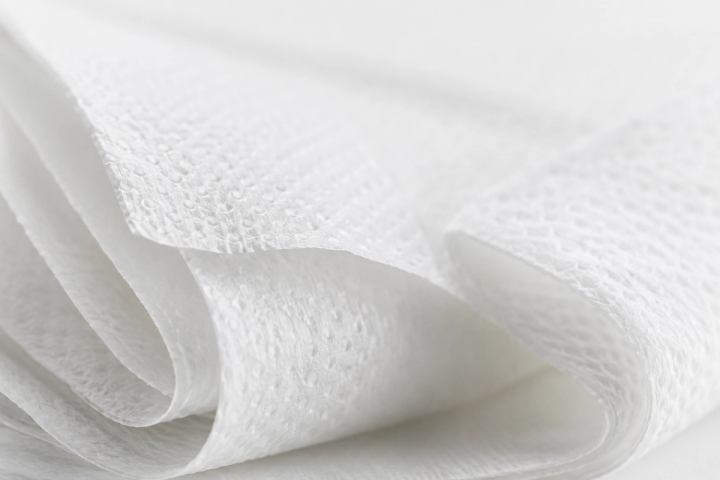
Tissue paper is the core raw material in napkin production. It arrives at the factory as a large parent reel, which the machine unwinds, embosses, folds, and cuts into finished napkins.
GSM — what it means and what India actually uses
GSM stands for grams per square metre — the standard measure of tissue paper weight and density. Higher GSM generally means heavier, thicker tissue. Lower GSM means lighter, thinner tissue with more bulk created through embossing and ply construction.
The global standard for a 1-ply napkin is 18 GSM. For 2-ply, 17 GSM per layer. For 3-ply, 16 GSM per layer. India operates differently. The market largely runs on lower GSM paper — 2-ply at 15 GSM is considered premium in many segments. Some markets still use MG Poster — machine glazed paper — a harder, glossy-surface tissue used where softness is less of a priority than durability or cost.
There is no single "correct" GSM for Indian production. The right input depends entirely on what your target market is buying and what your machine is specified to run.
GSM range and your machine specification
Not every machine can run every GSM. A well-engineered napkin machine with a leather belt unwind unit can handle a GSM range of approximately 13–14 GSM at the lower end to 22 GSM or higher, depending on customer requirements. The leather belt unwind controls tension on the paper web as it feeds into the machine — without it, running very low GSM paper cleanly becomes significantly more difficult, and the usable GSM range narrows.
This is a specification point worth confirming before you buy a machine. The raw material you plan to run should be compatible with the machine's unwind system. The BHM-PN-01 Single Deck Paper Napkin Machine is an example of a machine built with this capability — able to run a wide GSM range cleanly due to its unwind engineering.
Virgin vs recycled paper
Both virgin and semi-virgin (recycled) tissue paper are used in Indian napkin production. The choice is not a quality judgement — it is a specification and market decision. What matters more than virgin or recycled status is the paper's wet strength and consistency.
Wet strength refers to how well the tissue holds together when it comes into contact with moisture. A napkin with poor wet strength disintegrates on contact — which is, self-evidently, a problem. When evaluating paper suppliers, wet strength is a non-negotiable specification regardless of whether the paper is virgin or recycled.
The joints problem — the most overlooked raw material issue in tissue production
A joint is a splice in the paper reel — a point where one roll of paper has been joined to another during manufacturing. Every joint in a reel requires the machine operator to slow down production, manage the web through the splice, and restart at full speed once it has passed through.
Production output is inversely proportional to the number of joints in a reel. More joints mean more stoppages, more slowdowns, and lower effective throughput — even on a machine running perfectly. A reel with frequent joints on a high-speed machine is a guaranteed production bottleneck.
When sourcing tissue paper, ask suppliers specifically about joint frequency. Zero joints is the standard to hold them to. Anything else should be negotiated explicitly, with the production impact factored into your cost calculation.
Reel handling — a problem that starts before production
A tissue paper reel that has been stored incorrectly, dropped, or transported without proper protection can develop a bend or deformation in the core. A bent reel causes the paper web to shift laterally as it unwinds — the web does not track straight through the machine, and the result is inconsistent folding, mis-registration, and product variation.
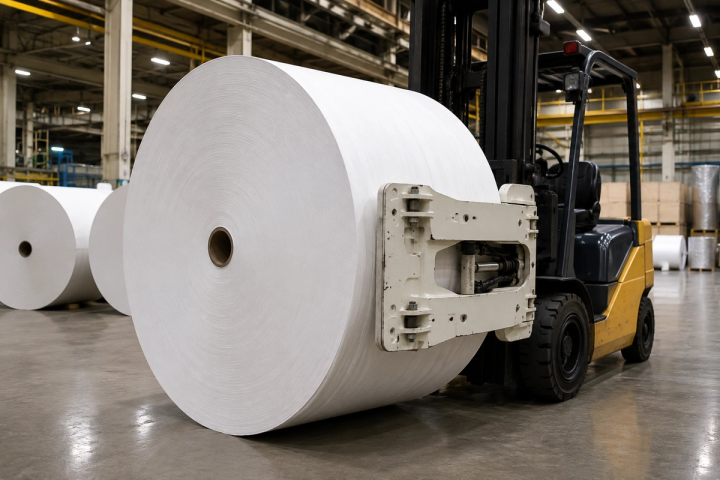
This is not a machine problem. It is a handling problem. Reels should be stored vertically, transported with core protection, and inspected for deformation before being loaded onto the machine. A reel that shows visible deformation should not be run — the production loss from trying to correct it mid-run exceeds the cost of the reel.
Moisture content in the reel also affects production — paper that is too dry or too moist behaves differently through the folding and cutting sequence. Managing storage conditions to maintain consistent moisture levels is a discipline that experienced manufacturers build into their process from the start.
Packaging Materials
Once napkins are folded and counted, they move to packaging. The primary packaging materials are:
Plastic film — the most common outer wrapper for napkin packets in India. Specification varies by market — thickness, clarity, heat-seal strength. The packaging material should be matched to the packaging machine being used and the retail environment the product will sit in.
Tape and glue — used in bundle sealing and carton assembly. These are consumable inputs with relatively low specification complexity, but consistency matters. A glue that does not bond reliably at production line speed creates downstream problems in packing and despatch.
These materials are sourced domestically without difficulty across most of India. Specification is straightforward — match to your packaging equipment and your retail or institutional customer's requirements.
Ink — For Machines With Printing Units
Ink is only relevant for napkin machines fitted with printing units. A plain white napkin machine does not use ink.
For machines with one or more colour printing units — including 6-colour flexographic printing machines used for designer and patterned napkins — the ink specification matters for both print quality and food safety. Napkins come into contact with food and mouths; the inks used must be food-safe and compliant with the relevant market's regulatory requirements.
Flexographic inks used in napkin printing are water-based in most applications. Colour consistency, drying speed, and compatibility with the specific anilox roller specification of the printing unit are the key technical parameters. Work with ink suppliers who have specific experience in tissue printing — general printing inks are not always appropriate for this application.
The One Thing to Get Right
If there is a single principle that covers raw material selection in tissue manufacturing, it is this: do not compromise on input quality to save money on the input.
The economics are the same as the machine decision. A cheaper tissue paper reel with more joints, lower wet strength, or inconsistent GSM will cost more in lost production, quality failures, and customer complaints than the saving on the reel price. A machine running on good raw material will produce consistently. A machine running on poor raw material will not — regardless of how well the machine itself is engineered.
Source from established domestic mills. APP holds a significant share of the Indian tissue paper market and is known for consistent wet strength and reel quality. Several domestic mills produce competitive quality. Evaluate suppliers on wet strength specification, joint frequency, and reel winding consistency — not on price alone.
The manufacturers who build durable, profitable tissue businesses are the ones who apply the same standard to their raw material as they do to their equipment. Both decisions compound over time. Both reward getting right from the start.
Further Reading
For guidance on selecting the right paper napkin machine for your production requirements, visit birlahitechmachines.com — including the full specification for the BHM-PN-01 Single Deck Paper Napkin Machine.
For a complete first-time buyer's guide, read How to Choose a Paper Napkin Machine in India on The Tissue Industry Review.
The Tissue Industry Review is an independent editorial publication covering the tissue conversion and paper products manufacturing sector in India and globally.
/ RELATED ARTICLES
Keep Reading

Technical Knowledge
Laminated Tissue Napkins: What They Are, Who Buys Them, and Why the Margin Makes Sense
Laminated tissue napkins sell at ₹1.60–₹2 per piece. Standard 2-ply costs ₹0.91 to produce at the same size. Same paper, same GSM — here's what lamination adds.
29 Sept 2026· 6 min read

Technical Knowledge
B-Fold Napkins: The Smarter Alternative to Standard Tissue Napkins
B-fold napkins are cheaper per unit than standard 1-ply tissue, more absorbent, and more hygienic. Here's the math — and why the Indian market hasn't caught up yet.
25 Sept 2026· 6 min read

Technical Knowledge
Bamboo Tissue: A Sustainable Alternative and Why Responsible Raw Material Sourcing Matters for Tissue Converters
The real opportunity in sustainable tissue isn't bamboo alone — it's ensuring every fibre, whether bamboo or virgin wood pulp, is sourced responsibly. A perspective from Orient Paper.
21 Jul 2026· 5 min read